Medicare Diabetes Supplies in NC: Part B vs Part D
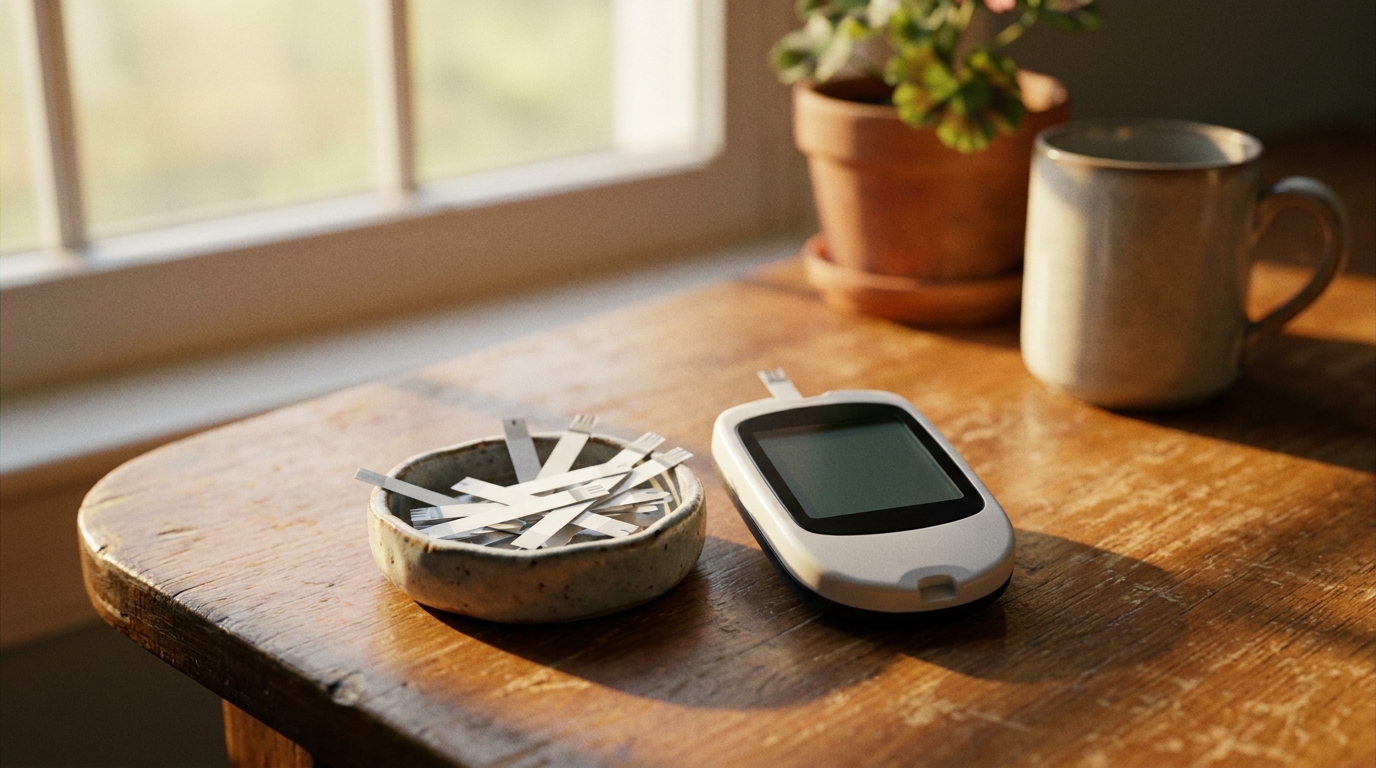
Medicare covers diabetes testing supplies, continuous glucose monitors, and traditional insulin pumps under Part B durable medical equipment rules, while some insulin and some injection supplies stay on Part D.[5][7] After you meet the yearly Part B deductible, you generally pay 20% of the Medicare-approved amount for those Part B items if your supplier accepts assignment.[1][6][9] The monthly insulin copay cap is a different protection. We explained it in our Medicare insulin copay cap article, and we will not recap that math here.
For families in Greensboro and the rest of the Piedmont, the coverage is federal. What still varies is the plan, the supplier, and whether a claim is billed to Part B or Part D.
How Medicare splits diabetes testing and pump supplies
Medicare diabetes supplies are not one benefit. Original Medicare Part B treats home blood glucose monitors, test strips, lancets, control solutions, continuous glucose monitors, and traditional (non-disposable) insulin pumps as durable medical equipment when they are medically necessary and prescribed for use in the home.[1][2][3][4][6] Part B also covers the insulin used in a durable pump, because that insulin travels with the equipment benefit rather than the pharmacy benefit.[5][7]
Part D (a standalone drug plan, or the drug coverage inside many Medicare Advantage plans) is where injectable insulin, inhaled insulin, disposable “patch” pumps, and common injection supplies usually live. Medicare’s consumer insulin page is explicit: Part B does not cover insulin that you self-administer with pens, disposable insulin pumps (also called patch pumps) or the insulin used with them, or insulin-related supplies such as syringes, needles, alcohol swabs, or gauze.[5] If you have a Part D plan, that plan may cover those items.[5][7]
If you have a Medicare Advantage plan, the plan must cover at least the same medically necessary categories Original Medicare covers. Copays, preferred suppliers, and prior authorization can still differ. Our Medicare Advantage page explains how those plans package medical and drug coverage. Ask the plan which supplier to use before the first CGM or pump shipment. The general DME rules (enrolled suppliers, assignment, 20% coinsurance after the Part B deductible) still apply. We covered that broader picture in our durable medical equipment guide. This article stays with diabetes testing, sensors, pumps, and the Part D leftovers.
Blood glucose monitors, test strips, and lancets under Part B
A home blood glucose monitor uses a small drop of blood, usually from a fingertip, to show your blood sugar at that moment. Medicare Part B covers blood glucose monitors that your doctor prescribes for use in your home.[1] It also covers related supplies billed as DME: test strips, lancets and lancet holders, and control solutions used to check that the meter and strips are working correctly.[2][3][13]
You do not have to use insulin to get a covered meter. CMS tells providers that Part B covers blood glucose self-testing equipment and supplies for people with diabetes even if they do not use insulin.[7] Quantity is where insulin status matters. If you use insulin, you may be able to get up to 300 test strips and 300 lancets every 3 months. If you do not use insulin, you may be able to get 100 of each every 3 months, plus one spring-powered lancet device every 6 months.[3][7][8][10]
If your doctor says you need to test more often, Medicare can allow more strips and lancets. You may need to keep a record of how often you actually test.[10] CMS also requires a visit within the 6 months before ordering the extra quantity, and a check every 6 months that you are following the higher testing schedule. Excess quantities without those steps can be denied as not reasonable and necessary.[8]
Medicare covers the equipment and supplies only if you have a prescription. That order should say that you have diabetes, what kind of meter you need and why (for example, a special monitor because of vision problems), whether you use insulin, how often you should test, and how many strips and lancets you need for one month.[7][10] You need a new prescription for lancets and test strips every 12 months, and you must ask for refills. Medicare will not pay for supplies you did not request, or for supplies a supplier shipped automatically.[7][10]
You can pick supplies up at a pharmacy or order them from a medical equipment supplier after the prescription is in place. The pharmacy or supplier, not you, submits the Part B claim.[7][10] Before you order, ask two questions: Are you enrolled in Medicare? Do you accept assignment? If either answer is no, find another enrolled supplier. Medicare will not pay for DME from a supplier that is not enrolled, and you would owe the whole bill.[6][7]
Continuous glucose monitors: the Part B rules
A continuous glucose monitor tracks glucose through a device attached to your body. Medicare may cover a CGM and related supplies (such as sensors) as Part B DME if you are eligible, with 20% coinsurance after the Part B deductible if the supplier accepts assignment.[4]
If you have diabetes, Medicare may cover a CGM when your doctor or other health care provider orders it and you meet both of these conditions: you take insulin or have a history of problems with low blood sugar (hypoglycemia), and you or your caregiver have had enough training to use the monitor as directed.[4][10] The provider must evaluate you before ordering the device.[4] If you use a CGM, you must make routine in-person or Medicare-approved telehealth visits with your doctor.[10]
CMS’s glucose-monitor guidance is what a supplier will actually check. The CGM must be prescribed under its FDA indications for use. The patient must be insulin-treated, or have a documented history of problematic hypoglycemia (recurrent level 2 events with glucose under 54 mg/dL that persist despite treatment changes, or one level 3 event that required another person to help).[8] Six months before the order, the treating practitioner must have an in-person or Medicare-approved telehealth visit to evaluate diabetes control and confirm those criteria.[7][8] For continued coverage, that visit continues every 6 months, with documentation that you are using the CGM as prescribed.[8]
Covered CGM supplies include sensors and transmitters.[7] Extra fingerstick strips and lancets on top of a CGM are a separate question. CMS says Part B covers additional blood glucose test strips and lancets with a CGM only if the doctor documents why they are medically necessary.[7] Ask the prescriber to write that need if you still fingerstick for calibration, illness, or a backup meter. Use a Medicare-enrolled supplier, and ask about assignment before the first shipment of sensors.[4][6]
Insulin pumps: durable equipment on Part B, disposable pumps on Part D
If you use an insulin pump worn outside the body that is not disposable, Part B may cover the pump itself and the insulin used with it as durable medical equipment.[5][7][10] For the pump hardware, you pay 20% of the Medicare-approved amount after the annual Part B deductible when assignment is accepted.[7] The insulin inside that durable pump is still insulin, so the monthly insulin cost protection can apply to it. That is the cap we already covered. It is not a waiver of coinsurance on the pump, the tubing, or other pump supplies.[7] If you want the insulin-cost rule, read the insulin copay cap article.
Disposable pumps are different. CMS lists disposable “patch” insulin pumps (examples include OmniPod, V-Go, or similar items), the insulin used in those disposable pumps, and insulin you inject with a needle as items Part B does not cover. A drug plan may cover them.[7] Medicare.gov matches that split: Part D may cover insulin used with pumps that are not DME under Part B, including disposable pumps changed after 2 to 3 days and certain reusable pumps that use disposable insulin cartridges, plus insulin that is inhaled.[5][10]
The doctor’s order should say which kind of pump the insulin is for. CMS asks prescribers to write language such as “Insulin for Durable Insulin Pump” or “Insulin for Disposable Pump” so the pharmacy bills the right payer.[7] If you live in certain areas of the country, you may have to use specific insulin pump suppliers for Medicare to cover a durable insulin pump.[5][10] Use Medicare’s supplier directory and ask whether that supplier is enrolled and will accept assignment before the pump is ordered.
Assignment, enrolled suppliers, and what you pay in 2026
Assignment is the agreement that keeps your share closer to the Medicare-approved amount. If a provider or supplier accepts assignment, they agree to charge you only the Medicare deductible and coinsurance, they usually wait for Medicare to pay its share before asking you for yours, and they submit the claim without charging you to file it.[12] Participating suppliers must accept assignment. A non-participating supplier does not have to, but may choose to on your claim.[1][6]
For Original Medicare Part B diabetes DME (meters, strips, lancets, CGMs, durable pumps), the cost pattern is the same: after you meet the Part B deductible, you pay 20% of the Medicare-approved amount if the supplier accepts assignment.[1][2][3][4][6] For 2026, Medicare.gov lists that yearly Part B deductible as $283 before Original Medicare starts to pay.[9] Original Medicare has no yearly cap on that 20% unless you have something else, such as a Medigap policy or a Medicare Advantage plan.[9]
If you have Original Medicare and a Medigap policy that pays Part B coinsurance, that policy can help with the 20% on assigned Part B diabetes equipment. It does not pay Part D pharmacy coinsurance for syringes or disposable-pump supplies. A Medicare Advantage plan can use copays instead of 20% coinsurance and can steer you to network DME suppliers. Call the plan with the exact item before anything ships. Medicare will only pay for DME items if you get them from suppliers enrolled in Medicare.[1][6]
Part B also covers therapeutic shoes and inserts if you have diabetes and severe diabetes-related foot disease. Each calendar year you can get either one pair of custom-molded shoes (including inserts) plus 2 more pairs of inserts, or one pair of extra-depth shoes plus 3 pairs of inserts, with 20% coinsurance after the deductible if the supplier accepts assignment.[11] The doctor treating your diabetes must certify the need, and a qualified fitter enrolled in Medicare must provide the shoes.[11] Regular orthopedic shoes are not this benefit.[7]
What stays on Part D
Keep a short list of what does not ride on the Part B DME claim.
Part D plans may cover injectable insulin (insulin you inject with a pen or a needle), insulin used with pumps that are not DME (disposable patch pumps and certain reusable pumps that use disposable cartridges), inhaled insulin, and certain medical supplies used for insulin injections: syringes, needles, gauze, and alcohol swabs.[5][7][10] Part B does not cover those injection supplies. If you do not have Part D, you pay those costs in full under Part B.[5]
Other diabetes medicines that are not insulin (metformin and similar oral drugs, for example) also go through the drug plan when they are on the formulary.[7] They are not DME, and they are not the insulin copay cap. Amounts you pay for covered Part D drugs can count toward the yearly Part D out-of-pocket cap, which is a different rule from the monthly insulin limit. We explained that annual cap in our Part D out-of-pocket cap article.
If a fill looks wrong, ask which payer received the claim. A durable-pump insulin claim sent to Part D can deny. A patch-pump claim sent to Part B can deny. Strips billed as a pharmacy cash sale, instead of as Part B DME through an enrolled supplier, can leave you paying retail.
A practical check for Greensboro and Piedmont families
North Carolina does not write a separate diabetes-supply fee schedule for people on Medicare. The coverage is federal. What you can still do locally is line up the paperwork before the next 90-day shipment.
Write down how you actually test and take insulin: fingerstick meter, CGM, durable pump, patch pump, pen, or syringe. Then match each item to a payer. Meters, strips, lancets, control solution, CGMs, and traditional pumps generally go to Part B DME through an enrolled supplier.[1][4][7] Pens, syringes, alcohol swabs, gauze, disposable pumps, and the insulin for those disposable pumps generally go to Part D.[5][7]
Confirm the prescription is current. Strips and lancets need a new order every 12 months. A CGM needs the eligibility visit in the 6 months before the order, then ongoing visits.[8][10] Ask the supplier, before delivery, whether they are enrolled in Medicare and whether they accept assignment.[6][12] We do not replace your doctor, and we do not sell meters or pumps. We help you see which part of Medicare is supposed to pay.
Practical takeaways
- Part B covers home blood glucose monitors, test strips, lancets, control solutions, CGMs, and traditional (non-disposable) insulin pumps as DME when they are prescribed for home use.[1][2][3][4][7]
- Usual strip and lancet amounts are up to 300 of each every 3 months if you use insulin, and 100 of each every 3 months if you do not. Higher amounts need extra documentation.[3][7][8][10]
- A CGM on Part B generally requires diabetes plus insulin use or a history of hypoglycemia, enough training, an FDA-indicated prescription, and a clinician visit within 6 months of the order.[4][8]
- Durable external pumps and the insulin used with them can be Part B DME. Disposable patch pumps and their insulin usually go through Part D.[5][7]
- After the 2026 Part B deductible of $283, you generally pay 20% of the Medicare-approved amount for assigned Part B diabetes DME. Use an enrolled supplier that accepts assignment.[1][6][7][9]
- You must request refills. Medicare will not pay for strips, lancets, or meters shipped automatically without your request.[7][10]
- Syringes, needles, alcohol swabs, gauze, injectable pen insulin, and disposable-pump supplies stay on Part D if your plan covers them.[5]
- The monthly insulin copay cap is a separate rule. See our insulin copay cap article for that protection, not this one.
How we can help
Have more questions or want to get in touch? Seniors Insurance Hub is an independent Medicare and senior insurance advisory serving Greensboro and the Piedmont. We can review your meter, CGM, pump, and pharmacy list next to Original Medicare, Medigap, or a Medicare Advantage plan, and help you see which part of Medicare should pay before the next order goes out. Call us at (336) 937-7501 or visit https://thesih.com/contact/.
Citations
- Medicare.gov, "Blood sugar monitors" (2026)
- Medicare.gov, "Blood sugar test strips" (2026)
- Medicare.gov, "Lancets & lancet holders" (2026)
- Medicare.gov, "Continuous glucose monitors" (2026)
- Medicare.gov, "Insulin" (2026)
- Medicare.gov, "Durable medical equipment (DME) coverage" (2026)
- Centers for Medicare & Medicaid Services, "Medicare Coverage of Diabetes Supplies (MLN7674574)" (2026-02)
- Centers for Medicare & Medicaid Services, "Glucose Monitoring Supplies" (page last modified 2026-02-11)
- Medicare.gov, "Costs" (2026 Part B deductible and coinsurance)
- Medicare.gov, "Medicare Coverage of Diabetes Supplies, Services & Prevention Programs" (CMS Product No. 11022, 2026)
- Medicare.gov, "Therapeutic shoes & inserts" (2026)
- Medicare.gov, "Does your provider accept Medicare as full payment?" (2026)
- Medicare.gov, "Blood sugar control solutions" (2026)