Medicare dialysis coverage: Part A, Part B, fourth month
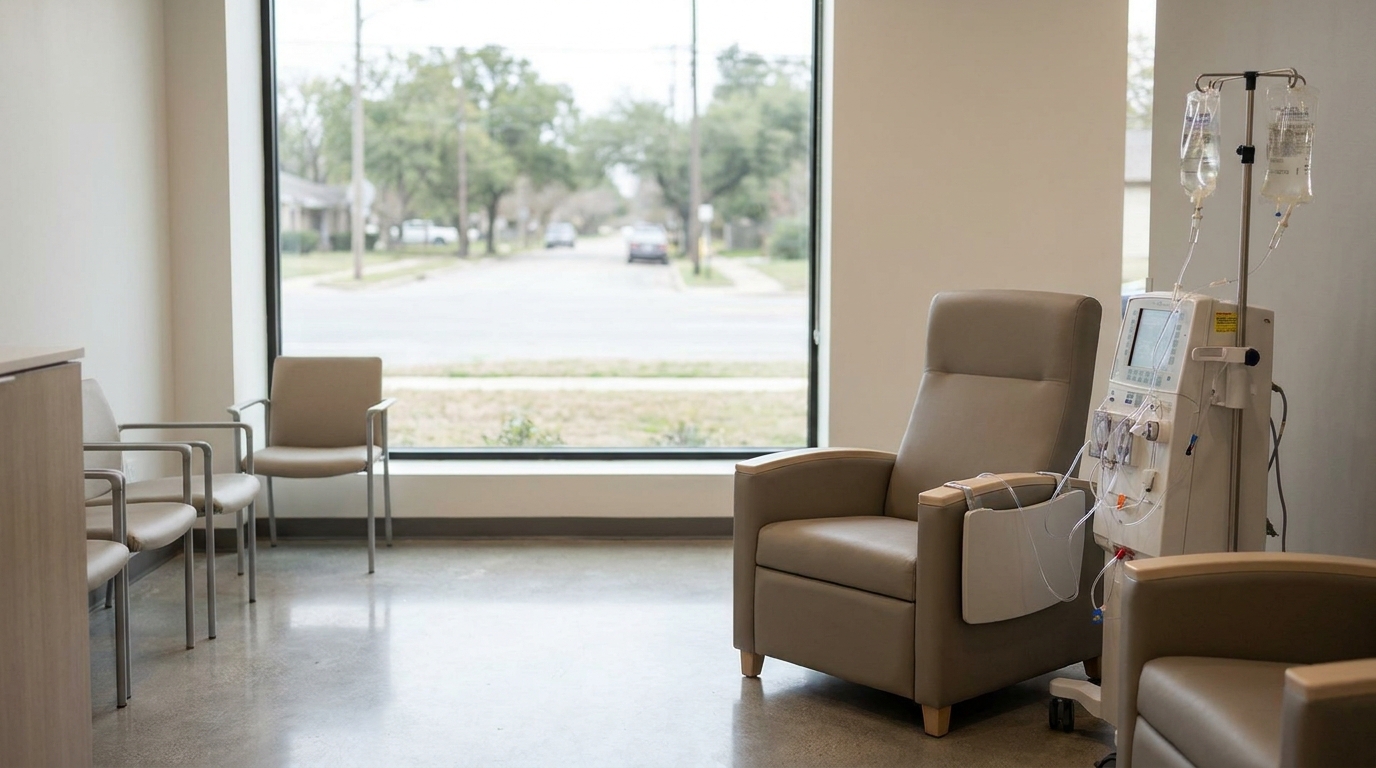
A parent starting dialysis, or an adult child reading the bills, usually wants to know what Medicare pays, when it starts, and what is still left for the family. End-Stage Renal Disease, or ESRD, is permanent kidney failure that requires a regular course of dialysis or a kidney transplant, and a person can get Medicare at any age when the work and family rules are met [2]. Medicare dialysis coverage under Original Medicare splits the bill: Part A for inpatient dialysis in a hospital, and Part B for outpatient treatment in a Medicare-certified facility or at home [1]. Both parts have to be in place to get the full benefits Medicare describes for people with ESRD [1]. Households in Greensboro and the rest of the Piedmont use these same federal rules. Where someone sits for treatment does not create a separate North Carolina benefit.
Who can get Medicare for permanent kidney failure
Medicare's ESRD page says you can get Medicare no matter how old you are if all of these apply. Your kidneys no longer work. You need regular dialysis, or you have had a kidney transplant. And one of these is true: you worked the required amount of time under Social Security, the Railroad Retirement Board, or as a government employee; you already receive, or you are eligible for, Social Security or Railroad Retirement benefits; or you are the spouse or dependent child of a person who meets one of those tests [2].
Signing up is a choice. If you qualify for Part A because of ESRD, you can also get Part B, and you need both parts for the full benefits available for certain dialysis and kidney transplant services [2]. You can sign up at a local Social Security office or by calling Social Security at 1-800-772-1213 (TTY 1-800-325-0778) [2]. Railroad Retirement Board beneficiaries call 1-877-772-5772 [2]. If you are approved because of ESRD, you can take Part B without a late enrollment penalty [2]. If you already have Medicare because of age or disability and you are paying a Part B late enrollment penalty, you must sign up again because of ESRD to stop that penalty [2].
Many people we talk with already have Medicare for age or disability. For them, Medicare covers physician-ordered fistula placement and other preparatory services before dialysis begins [2]. The waiting period described below is the start rule for coverage based on ESRD.
Premiums are not the same for the two parts. On Medicare's 2026 cost chart, Part A is $0 a month for most people because they paid Medicare taxes long enough while working, generally at least 10 years [3]. That chart lists a standard Part B premium of $202.90 each month, or higher depending on income, and you pay it every month even if you do not use a Part B service [3].
When coverage starts
If you are eligible because of ESRD and you wait to sign up, coverage can start up to 12 months before the month you apply [2]. Medicare's example is eligibility in February and an application in November, with coverage starting in February. Medicare calls that retroactive coverage [2].
On dialysis, coverage usually starts on the first day of the fourth month of treatments. The waiting period runs even if you have not signed up yet [2]. Dialysis that starts on July 1 means coverage on October 1, even if the application is not filed until December 1 [2]. An employer group health plan does not change that date. Medicare still starts in the fourth month, and the group plan may pay the first 3 months of dialysis [2].
Home training can move the start earlier. Coverage can begin in the first month of a regular course of dialysis if all three of these are true. You participate in a home dialysis training program at a Medicare-certified training facility during the first 3 months of regular dialysis [2]. Your doctor expects you to finish training and do your own treatments at home [2]. You keep a regular course of dialysis through the waiting period that would otherwise apply [2].
Medicare will not cover surgery or other services needed to prepare for dialysis, including fistula surgery, before coverage begins [2]. If you finish home dialysis training, coverage starts the month regular dialysis begins, and those preparatory services could be covered [2]. Someone who already has Medicare because of age or disability is in a different spot: physician-ordered fistula placement and other preparatory services can be covered before dialysis starts [2].
If the path is a transplant instead, coverage can begin the month you are admitted to a Medicare-certified hospital for the transplant, or for care you need before it, when the transplant happens that month or within the next 2 months [2]. If the transplant is delayed more than 2 months after the admission, coverage can begin 2 months before the transplant [2].
If you have Medicare only because of permanent kidney failure, coverage ends 12 months after the month you stop dialysis, or 36 months after the month of a kidney transplant [2]. It can resume if dialysis or a transplant happens within 12 months after the month dialysis stopped, or if dialysis or another transplant happens within 36 months after the month of a transplant [2].
What Part A pays and what Part B pays
Part A covers inpatient dialysis when you are in a hospital [1]. Inpatient hospital care means care after you are admitted for at least one night [4]. You must be admitted with a doctor's order saying you need inpatient care to treat your illness or injury, and the hospital must accept Medicare [4]. Part A pays for the dialysis you get during that stay. A treatment in a clinic chair is not the same admission.
Part B helps cover outpatient dialysis treatments and doctors' services in a Medicare-certified dialysis facility or at home [1]. The dialysis coverage page says you must have ESRD [1]. Part B also helps cover home dialysis training for you and for the person helping you, if you are a candidate for home dialysis [1]. A Medicare-certified home dialysis training facility must provide the training, and only a Medicare-certified dialysis facility can bill Medicare for it [1].
The Part B list also includes home dialysis equipment and supplies, certain home support from the facility, laboratory tests that are renal dialysis services, and direct nursing from nurses, technicians, social workers, and dietitians [1]. It includes heart monitoring during treatment, oxygen given if needed during a facility treatment, monitoring of the access site, and certain nutritional services [1]. The facility must provide these items and services, either directly or through another provider [1].
Drugs used for outpatient and home dialysis are on that Part B list, including heparin when medically necessary, topical anesthetics, and erythropoiesis-stimulating agents used to treat anemia related to ESRD [1]. Phosphate binders are covered when they are used to control phosphorous levels in people with ESRD [1].
Medicare describes the usual frequency as generally 3 hemodialysis treatments each week, or equivalent peritoneal dialysis treatments, if you have ESRD [1]. A doctor may recommend something Medicare does not cover or covers less often, and that recommendation can add cost [1]. Ambulance service is narrow. Part B covers an ambulance from your home to the nearest dialysis facility, and back, only when any other vehicle could endanger your health [1].
What you pay in a clinic and in the hospital
After you meet the Part B deductible, dialysis in a facility costs you 20% of the Medicare-approved amount [1]. That coinsurance dollar amount may vary [1]. Outpatient doctors' services leave you with the remaining 20% of the Medicare-approved amount after the Part B deductible [1]. Home dialysis training is the same: 20% of the Medicare-approved amount after the Part B deductible [1].
Medicare's 2026 Part B chart puts the deductible at $283, paid once each year before Original Medicare starts to pay [3]. For Part B services and items in general, the chart says you usually pay 20% after that deductible [3]. The dialysis page is the one that states 20% for facility treatments, outpatient doctor services, and home training [1]. It does not list a separate percentage for every home supply [1]. You still pay the monthly Part B premium, and the Part D premium if you have drug coverage [1]. Original Medicare has no yearly limit on out-of-pocket costs unless you have supplemental coverage, such as a Medigap policy, or you join a Medicare Advantage Plan [3].
A Medigap policy that covers all or part of the 20% coinsurance, or a Medicare Advantage Plan, can change what you pay [1]. Read the plan materials or call the benefits administrator for those figures [1]. Medigap is meant to lower your share of Part A and Part B costs in Original Medicare [3]. Its premium varies by policy, where you live, and other factors, and it can change each year [3]. You must keep paying the Part B premium to keep the supplement [3]. We explain how we compare those policies on our Medicare Supplement page.
People with ESRD may choose Original Medicare or a Medicare Advantage Plan [2]. Original Medicare lets you use any doctor or hospital that takes Medicare, anywhere in the United States, and you can add a separate drug plan [2]. Before you join an Advantage plan, check that the dialysis facility and the kidney doctor are in the network, because what you pay in that plan may differ from Original Medicare [1][2].
Hospital dialysis is the Part A side. Part A pays for dialysis in the hospital after you pay the inpatient deductible [1]. For each benefit period in 2026, that deductible is $1,736, and then days 1 through 60 are $0 each day [4]. There is no limit to the number of benefit periods [3]. The kidney doctor bills separately for inpatient ESRD services, and that monthly payment is based on the number of days you are in the hospital [1].
Home dialysis gaps, other insurance, and travel
Medicare does not cover paid dialysis aides for home dialysis, lost pay for you or your helper during training, or a place to stay during treatment [1]. It does not cover blood or packed red blood cells for home dialysis unless the blood is part of a doctor's service [1]. Home support that can be covered includes visits from trained facility or hospital workers to check treatment, equipment, and the water supply, plus a face-to-face visit with your doctor or certain non-doctor providers once a month [1].
If Medicare is available only because of permanent kidney failure, the fourth-month waiting period means an employer or union group health plan is the only payer for the first 3 months of dialysis, unless other coverage is paying [2]. After that, a coordination period lasts 30 months, and the group plan keeps paying health care bills first [2]. If the plan does not pay 100% of the bill, Medicare may pay some of the rest [2]. When the 30 months end, Medicare pays first for Medicare-covered services, and the group plan may still pay for services Medicare does not cover [2]. Tell the provider about the group plan so the bill goes to the right place [2].
A new 30-month coordination period applies each time you sign up for Medicare based on permanent kidney failure [2]. If a transplant works for 36 months, Medicare that you have only because of kidney failure ends, unless you also have it because of age or disability [2]. If you sign up again after that because dialysis restarts or you receive another transplant, coverage starts right away, without a 3-month wait, though a new 30-month coordination period applies if a group plan is still in place [2].
Part B covers most drugs used for dialysis, and it covers transplant drugs after a covered transplant, but it does not cover prescriptions for other conditions such as high blood pressure [2]. Part D is the coverage for drugs Part B does not pay [2].
You can travel in the United States and still get dialysis. The facility can help you schedule treatments before you leave, and you may have to pay the copay at the time of treatment [2]. In North Carolina, the Department of Insurance runs the Seniors' Health Insurance Information Program, called SHIIP. Its counselors give free, unbiased information, and they do not sell or endorse a product. Call 1-855-408-1212, Monday through Friday from 8 a.m. to 5 p.m. [6]. SHIIP is not our office.
Kidney transplant drugs, in brief
This article is about dialysis. Drugs after a transplant are a shorter, separate rule.
If Medicare helped pay for the transplant, Part B covers transplant drug therapy, including standard and compounded immunosuppressive drugs, to prevent rejection [5]. You pay 20% of the Medicare-approved amount for related Part B services after the Part B deductible [5].
If you have Medicare only because of ESRD, that coverage, including immunosuppressive drugs, ends 36 months after a successful kidney transplant [2]. A further benefit can help pay for those drugs after 36 months if you had Medicare because of ESRD when you received the transplant, and you do not have or expect other coverage that pays for them [2]. The benefit covers only the immunosuppressive drugs and is not full health coverage [2]. In 2026 its premium is $121.60 a month, or higher based on income, and its deductible is $283 for the year [2]. People who also have Medicare because of age or disability are outside the "only because of ESRD" ending rule [2].
Practical takeaways
- You need both Part A and Part B for the full ESRD dialysis and transplant benefits Medicare describes [1][2].
- Coverage based on ESRD usually starts on the first day of the fourth month of dialysis, even if the application is still open [2].
- Certified home dialysis training can move the start to month one when the doctor expects home treatment and dialysis continues through the usual wait [2].
- Part A covers inpatient hospital dialysis [1]. In 2026 the Part A deductible is $1,736 per benefit period, then $0 a day for days 1 through 60 [4].
- Facility dialysis is 20% of the Medicare-approved amount after the Part B deductible, and home training is 20% as well [1]. In 2026 that deductible is $283, and the standard Part B premium is $202.90 a month [3].
- Paid home aides, lost wages during training, lodging, and home-dialysis blood (unless it is part of a doctor's service) are not covered [1].
- A group health plan can remain primary for a 30-month coordination period after kidney-failure Medicare begins [2].
- Medicare that exists only because of ESRD ends 36 months after a successful transplant, with a drug-only benefit available afterward for some people [2].
How we can help
Our team sits down with seniors, and with the adult children who help them, when a dialysis schedule and a stack of Medicare bills show up together. We can walk through what Original Medicare pays, what the coinsurance still leaves, and whether a Medicare Supplement policy fits someone who stays with Original Medicare. We do not replace the kidney doctor, the dialysis facility, or Social Security.
Have more questions or want to get in touch? Call us at (336) 937-7501, or reach our team on our contact page.
Citations
- Medicare.gov, "Dialysis services & supplies" (2026)
- Medicare.gov, "End-Stage Renal Disease (ESRD)" (2026)
- Medicare.gov, "What does Medicare cost?" (2026)
- Medicare.gov, "Inpatient hospital care" (2026)
- Medicare.gov, "Kidney transplants" (2026)
- North Carolina Department of Insurance, "Contact Seniors' Health Insurance Information Program (SHIIP)" (2026)